
About us
NBN Trust Board
All our board members are senior managers and experts in their field. They are recruited to ensure that all aspects of charity governance and financial compliance are met as well as providing specific knowledge in areas including information management, data science, business development and wildlife recording.
Board members
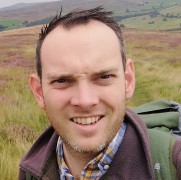
Pete Tomlin
Day job: Data & Evidence Professional & Trustee
Chairperson since November 2024 (Trustee since May 2021)
Pete is a strategist, consultant and leader.
- Data Service Lead at The Wildlife Trusts
- Chairperson of the National Biodiversity Network Trust
- Consultant and Guest Lecturer with Translating Data
Pete helps organisations turn data into meaningful impact, through evidence-based decision making and agile leadership. His work focuses on empowering non-profits and the public sector to deliver data-driven transformation at scale. He specialises in translating between strategic vision and technical data delivery teams.
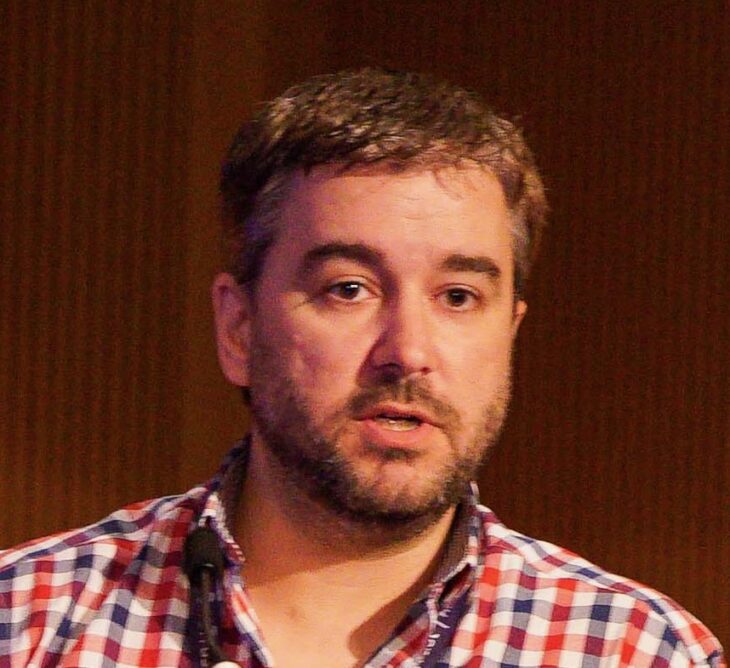
Dominic Aslan
Day job: Chief Information Security Officer
Trustee since November 2023
Dominic has been a technologist since his school days where he founded his first business providing technical support to staff and students alike. Now building on his 26 year IT career and recent experience as a Chief Technology Officer and Chief Information Security officer for some of the worlds most complex organisation he has founded and runs two successful and growing businesses in the cyber security industry.
No stranger to charity Dominic is the Chairman of the Charity IT Association (CITA) which works to provide free or low cost technical experts to other charities. He has also previously volunteered with the London Ambulance Service and St John Ambulance to setup the Community First Responder scheme in Wandsworth, been a ‘big brother’ to a teenager struggling with disadvantages and he also teaches martial arts and self-defence in his local area.
As a passionate skier and wake-boarder, Dominic is most at ease when he is outside and surrounded by nature. This love of the great outdoors is what drove him to join the NBN Trust.
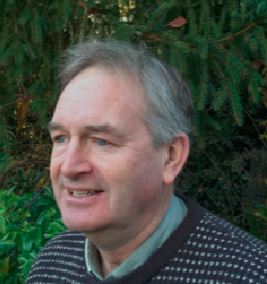
Rob Cooke
Day job: Non-executive Director and Environmentalist
Trustee since November 2023
Before leaving in July 2023 to pursue a range of wider interests, Rob was a Director at Natural England. He has worked in the environmental sector for over 35 years in both policy implementation and operational roles. Rob has led teams providing expert advice in both the marine and terrestrial environments, including nature conservation, access, and landscape.
Previously Rob has worked on agricultural policy implementation, biodiversity and wider environmental legislation, site designation, landscape-scale delivery, sustainable development issues and most recently legislative reform where he stood over Natural England’s advice to Government on designated sites strategy, Retained EU Law, and regulatory reform in general.
Rob has a long standing interest in ferns, and is currently President of the British Pteridological Society.
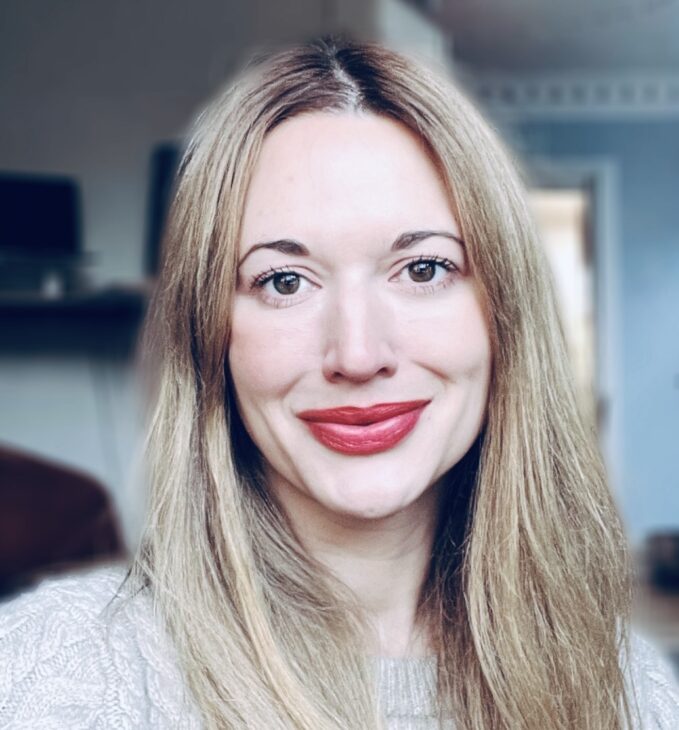
Dr Gail Hutton
Day job: Technical Director
Trustee since November 2023
Gail is a Statistician and Data Scientist. She has a PhD in statistical modelling and is a Chartered Statistician of the UK’s Royal Statistical Society. In her career to date she has held roles in statistical modelling, data science, digital analytics, and business strategy & leadership, in the technology and environmental sectors.
Gail has been the principal data expert for projects in the aviation, renewable energy and water industries, and her analytical work there has been used to set and ensure safety standards in UK airspace, support onshore wind & solar energy developments, influence policy and assess risk for offshore wind initiatives, and estimate the leakage levels in Scotland’s national water network. Her work in the technology sector has been used for digital product development in support of websites and apps that are used by hundreds of millions of people every month. In her current work as a Director at a Technology company, she works with data to inform the direction of consumer-facing digital products.
Gail is Scottish, lives in Copenhagen, and spends her free time on pattern design, clothes making, and walking with her dog in the local forest.
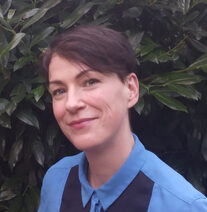
Alice Kershaw
Day job: Head of Digital Transformation at the Wildlife Trusts
Trustee since November 2023
Alice Kershaw, a digital specialist based near Bradford in West Yorkshire, has a background in driving transformative change and fostering digital cultures. With experience in process reengineering, service design, and project management Alice has always aimed to solve knotty problems in the third sector. In her current role as the Head of Digital Transformation at the Wildlife Trusts, she supports the 47 independent charities that form the Wildlife Trust federation in delivering on the ‘root and branch’ digital transformation of the 2030 Strategy. This includes ensuring data informs decisions and people have the skills and fit for purpose infrastructure to deliver what matters.
In her previous role as the Head of Investment Services at the National Lottery Heritage Fund, Alice successfully implemented a new Service Design team and approach and overhauled the Investment Management System, a complex and business critical project. Her skill set also encompasses leadership training through the Clore Leadership Programme, where she engaged in a fellowship focusing on community involvement and leadership across partnerships and systems thinking. Her background includes working as a Heritage Regeneration Officer in Peterborough and providing advice and support for charities on fundraising.
In her spare time she enjoys running across boggy landscape in all weathers, usually with cake.
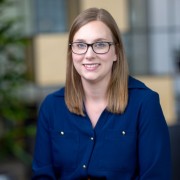
Dr Katie Leach
Day job: Head of Nature at Lloyds Banking Group
Trustee since May 2026
Katie is currently Head of Nature at Lloyds Banking Group and was previously Head of Biodiversity at ShareAction. At UNEP‑WCMC she led a programme of work focused on integrating nature into corporate and financial decision‑making.
Katie played a key role in developing the ENCORE tool and has been at the forefront of advancing corporate biodiversity measurement. She brings specialist expertise in geospatial data and modelling, applying these skills to support nature‑related risk assessment and translate complex spatial information into insights that are accessible and actionable for business audiences.
She was a Coordinating Lead Author of the IPBES Business and Biodiversity Assessment published in 2026.
She holds a PhD in Biological Sciences from Queen’s University Belfast and an MSci in Zoology from the University of Nottingham.
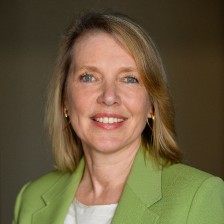
Louise Li
Day job: Non-Executive Director and Trustee
Trustee since November 2023
Louise has worked in the Financial Services sector for over 25 years in a variety of roles with international responsibilities including Regulatory Relations, Chief Operating Officer, International Director of Tax and Chair of an EU Bank.
Louise has experience in transformation of organisations, Boards, processes, and teams with key attention to strategy and governance. She has a deep knowledge of how to respond to internal and external factors in regulated environments, as well as customer demands, remediation, and strategic changes. This has allowed her to successfully lead and deliver multi-year strategic projects across international teams by having a commercially minded, problem-solving approach and strong relationship management skills.
She is driven by a passion for Sustainability and Diversity, Equity & Inclusion and a strong advocate for social change through leading and supporting teams. She works in an advisory capacity for the King’s Awards for Enterprise and has also engaged in the charity sector being a Chair and Trustee for Golden Lane Housing.
Louise is a UK qualified Chartered Accountant and Chartered Tax Advisor.
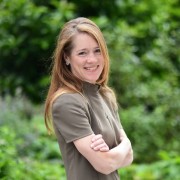
Vanessa Neill
Day job: Senior sustainability consultant, practitioner and adviser
Trustee since May 2026
Vanessa is a senior sustainability consultant, practitioner and adviser with more than 25 years’ experience in strategic communications and sustainability strategy. She co‑founded Ochre Partners and has advised public and private sector clients globally, including private equity firms, on embedding sustainability to protect and build long-term value. Vanessa is also a Non‑Executive Director of CVC Income and Growth Limited, a closed-ended investment company, where she leads on sustainability for the board.
She has previously been a Partner at Kekst CNC and Head of Communications for the Investment Banking and Capital Markets Division at Credit Suisse.
She completed a postgraduate Master’s level Diploma at the Cambridge Institute for Sustainable Leadership (CISL) in 2023 where some of her research included the role of the private equity industry in addressing the preservation and conservation of biodiversity and nature.
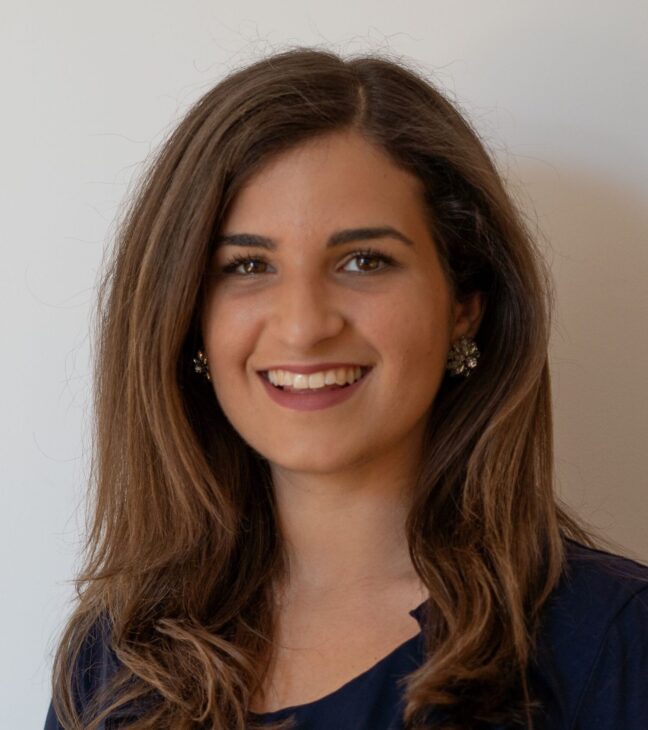
Eleni Polychroniadou
Day job: Co-Founder at Sintali Ltd
Trustee since November 2023
Eleni Polychroniadou is an impact entrepreneur, dedicated to improving the sustainability of the built environment. In 2020 she co-founded Sintali, an environmental verification body working to ensure that every building globally is green. A strategic thinker, Eleni specialises in joining dots between finance, verification, policy and delivery to increase accessibility and simplify the full green building ecosystem and process.
Eleni brings a multi-cultural approach to her work. As a Greek national who was raised abroad, she speaks 3 languages and has worked in the United States and Europe. In her current role at Sintali, she manages the international expansion plans for the organisation and works across 80 different countries across the world to support the uptake of green buildings. Her work has taken her across the globe to deliver presentations and build local partnerships, including India, Bolivia, France, the Czech Republic, Greece and Colombia.
In her spare time, Eleni is an amateur wildlife and nature photographer.
Mandy Rudd
Day job: Chief Executive of Greenspace Information for Greater London CIC (GiGL)
Trustee since 2017
Mandy’s the first person to admit she started working in the local environmental records centre (LERC) sector by accident. Having taken on a temporary admin role with London Wildlife Trust (LWT) in 1997, she immediately found something more interesting to do in the form of manually creating stag beetle distribution maps utilising the Trust’s public survey data, some paper maps and a red felt tip. Her colouring skills eventually led to a role as assistant biological recording officer on LWT’s Biological Recording Project, which was set up in 1996 as a precursor to an LERC for London. In 1999, Mandy took over as the Biological Recording Project’s Manager and led the establishment of Greenspace Information for Greater London, initially as a records centre hosted by London Wildlife Trust in 2006, and as an independent, not-for-profit community interest company in 2013.
Mandy learnt a lot from the National Biodiversity Network’s ‘Linking Local Records Centres’ project which started in 1998, and has been a keen advocate for the potential that local environmental records centres have as regional delivery nodes within the Network ever since. She represented the LERC community on the National Federation for Biological Recording council for 11 years from 2002, and was involved in the development work and eventual establishment of the Association of Local Environmental Records Centres (ALERC) in 2009. She was co-opted onto ALERC’s board of directors in 2011 and stood down 6 years later.
Mandy was co-opted onto the National Biodiversity Network Trust’s Board to represent ALERC in 2016, and was officially appointed to the Board as a trustee after the governance review in 2017.
Mandy lives in south London, works in central London and escapes to green and blue spaces close to home and further afield whenever she can.